A Changing Excise Landscape: What Karnataka’s Alcohol Content–Linked Taxation Could Mean for the Beer Industry
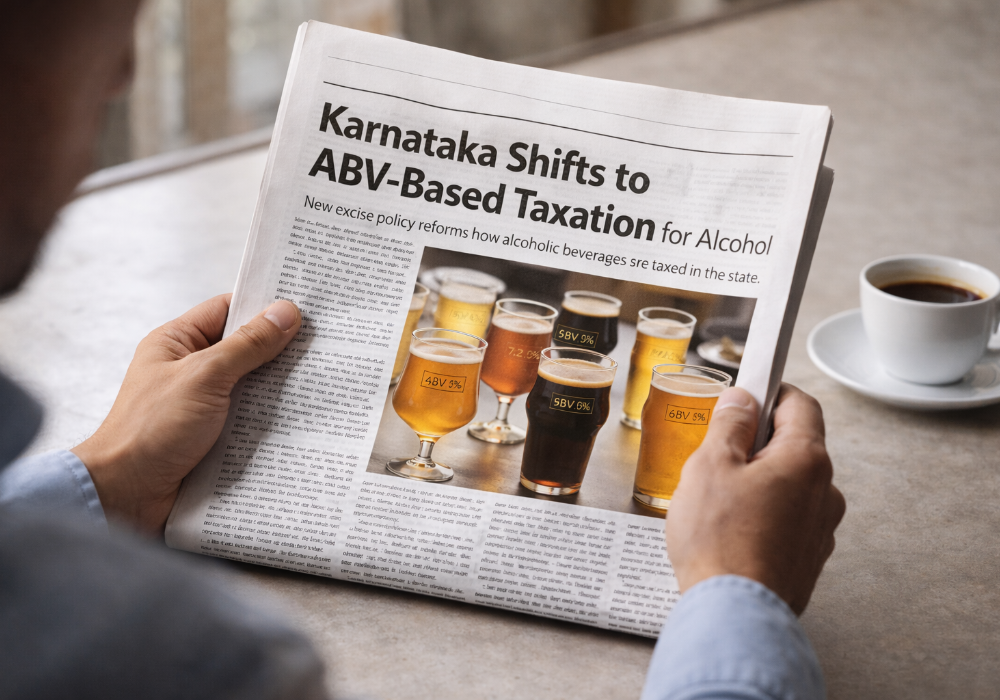
Policy shifts in India’s alcohol sector are often closely watched, not only because they affect pricing and operations, but also because they tend to signal the direction in which regulatory thinking may evolve. Karnataka’s recent decision to link excise taxation to alcohol content, rather than beverage volume, is one such development that has drawn considerable attention across the industry.
While the move is being introduced gradually, it represents an important shift in how alcoholic beverages may be assessed from a taxation standpoint. Traditionally, most excise frameworks in India have relied on volume-based taxation, where beverages are taxed largely on the quantity sold. By contrast, a system linked to alcohol strength attempts to account for the actual alcohol present in a product.
In many international markets, strength‑based taxation has long been seen as a more rational way of structuring duties across different beverage categories. The reasoning is straightforward: beverages with significantly different alcohol levels are recognised for their distinct characteristics rather than being treated uniformly under a single volume‑based framework. Karnataka’s move therefore reflects a regulatory approach that is increasingly aligned with how several mature markets structure alcohol taxation.
Power Cool: Karnataka's Second Most Popular Beer
Understanding the Difference Between Beverage Categories
For the beer industry, this change introduces an interesting dynamic. Beer typically contains lower alcohol levels when compared with most distilled spirits. According to global alcohol reference data published by the National Institute on Alcohol Abuse and Alcoholism (NIAAA), most standard beers generally fall in the range of about 4–7% alcohol by volume (ABV), while distilled spirits such as whisky, rum or vodka are commonly bottled at around 40% ABV.
In a taxation model that recognises alcohol strength, these differences naturally become more visible within the regulatory structure.
What This Could Mean for the Beer Segment
It would be premature to assume immediate market outcomes from such a shift. However, over time, policies that recognise differences in alcohol strength may contribute to a taxation environment that more accurately reflects the nature of different beverage categories.
For brewers, this could gradually influence pricing dynamics and the way products are positioned within the broader alcoholic beverage market. A framework that distinguishes between beverage strengths may allow regulators to structure duties in a way that more closely mirrors the characteristics of each category.

Consumer Behaviour and Evolving Drinking Patterns
Consumer behaviour is also shaped, at least in part, by the regulatory environments within which industries operate. Globally, beer has often been positioned as a relatively lighter social beverage within the alcohol ecosystem. In markets where taxation frameworks acknowledge variations in alcohol content, this distinction can sometimes become clearer to consumers as well.
Karnataka is already home to one of India’s most dynamic urban consumption markets, particularly in cities such as Bengaluru where evolving lifestyles, a young professional population, and a strong hospitality culture continue to influence drinking preferences. Over the past decade, the state has also played a significant role in shaping India’s modern beer culture, from the rise of microbreweries to a growing consumer appetite for diverse beer styles.
Implications for Breweries and the Industry
Against this backdrop, regulatory developments that introduce more nuanced taxation frameworks are likely to be closely observed by industry stakeholders. For breweries operating in the state, clarity in policy frameworks often plays an important role in shaping long‑term planning and investment decisions.
When regulatory systems evolve in ways that recognise product characteristics more precisely, they can help create a more predictable environment for businesses across the value chain.
Looking Ahead
Karnataka has historically been one of the more influential markets within India’s alcohol industry, and policy developments in the state often attract attention beyond its borders. While the full impact of linking excise duty to alcohol strength will only become clearer over time, the move represents an interesting step in the ongoing evolution of alcohol regulation in India.
For the brewing sector, it also opens the door to broader conversations around how taxation structures can better reflect the diversity of beverage categories within the industry. As the regulatory landscape continues to evolve, developments such as these may gradually contribute to a more balanced and transparent framework for the alcoholic beverage market as a whole.
Authored by: Vedant Kedia, Whole Time Director – Mount Everest Breweries Ltd.