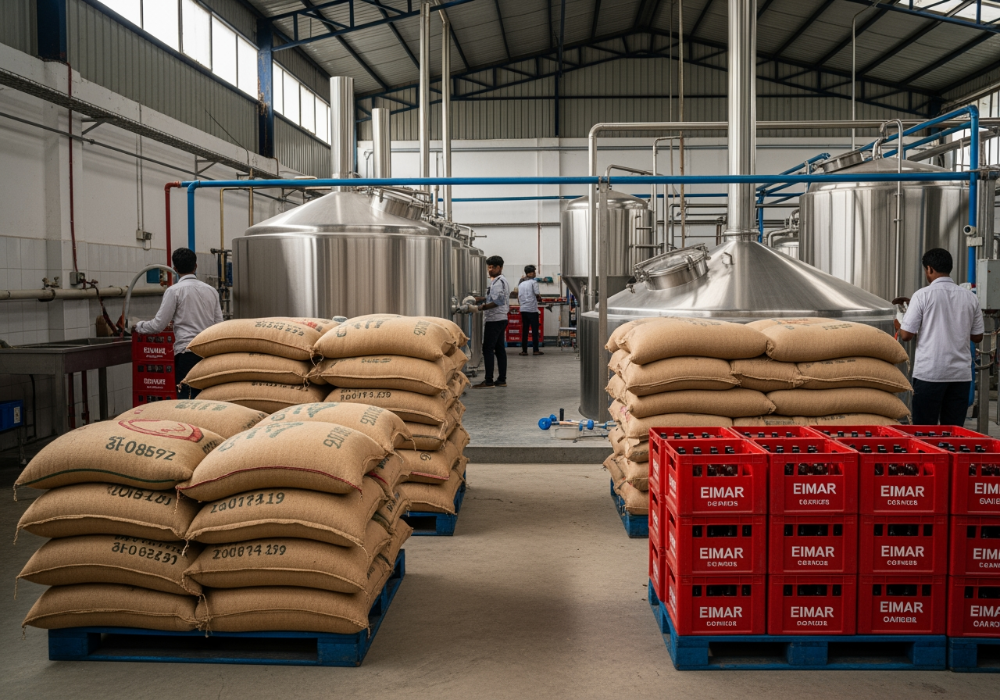
When a consumer grabs a cold beer, they are not just enjoying a refreshing drink, they are also supporting and completing a supply chain that stretches across sectors and keeps millions of jobs alive. We often talk about beer sales or market share, but we rarely pause to acknowledge the far-reaching impact the brewing industry has on allied industries and the people within them. The industry reaches into sectors, from the farms that grow the raw materials to the factories that manufacture the packaging. The logistics networks that move beer from farms to breweries and then to retail shelves are part of a much larger economic engine that the brewing industry powers.
The Medusa Effect On India's Beer Culture
The focus must always be on the liquid itself, the quality, the distinct taste, and the brand identity. But as the industry scales, it becomes immediately clear that every single product sold is a direct vote of confidence in India’s wider ecosystem. The economic footprint of this activity is staggering. According to the World Brewing Alliance, the beer industry contributes an enormous $878 billion to the global GDP. In India, this impact is felt sharply in manufacturing. Our choice of packaging whether glass, PET, or increasingly, aluminum cans drives employment and technological investment in the metals and packaging industries.
This dependency was highlighted dramatically during the recent aluminum can crisis when brewers faced shortages the whole value chain felt the disturbance. Indian brewers warned that the aluminum tin crisis could cause a revenue loss of about ₹1,300 crore. The aluminum tin crisis also created challenges in meeting requirements such as BIS certification. The industry crisis was not a beer problem. The industry crisis affected manufacturing, supply logistics and state revenues. The industry’s health is directly proportional to the health of the ancillary sectors it relies on.
The lesson from this rough patch is crystal clear, we can't just keep buying things year to year. We have to stop seeing our partners as just transactions and start building strong, local supply chains that can last. That means we shouldn't rely on simply importing cans whenever there's a shortage. Instead, we need real, long term partnerships with Indian can makers and logistics companies. For the whole industry to stay healthy, we have to commit to stability and taking care of the planet. This means supporting local can factories financially so that they can develop, and produce necessary standards that are important like BIS, so that when an issue arises within the global market, local can factories are not at risk.
Farmers need stable input costs through long-term contracts via transparent and clear agreements over multiple years. This dual commitment of securing high quality domestic inputs and guaranteeing a steady, sustainable packaging flow is the only stable path forward to safeguard the industry's growth trajectory and protect the thousands of indirect jobs it creates.
The beer industry’s success is an index for durable manufacturing, efficient logistics, and healthy agriculture. We are an economic multiplier, taking farm output, transforming it through domestic manufacturing, and delivering it via complex logistical networks. As we navigate rapid growth and changing consumer demands for premium products, brands must recognize that the biggest responsibility is to support the ecosystem they are a part of. By investing in our ancillary partners, we are not just investing in our own brands but we are investing in the economic stability and growth of India.
Attributed to: Avneet Singh, Founder & CEO, Medusa Beverages