For much of the past decade, Indian craft beer was driven by experimentation. Brewpubs competed to be more colourful, more flavoured, and more unusual than the next. Fruit beers, dessert stouts, and novelty ales helped bring people into the category. But as the industry matures, the focus is shifting toward something far more important: how well the beer is actually made.
Indian Craft Beer And The Shift Towards Local Ingredients
From fun flavours to serious brewing
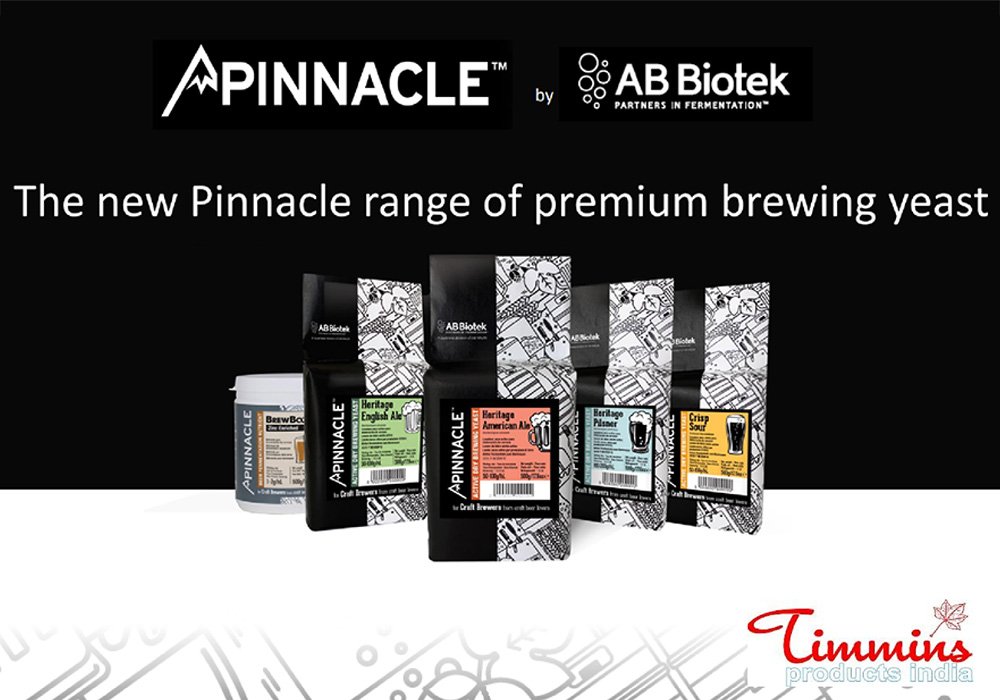
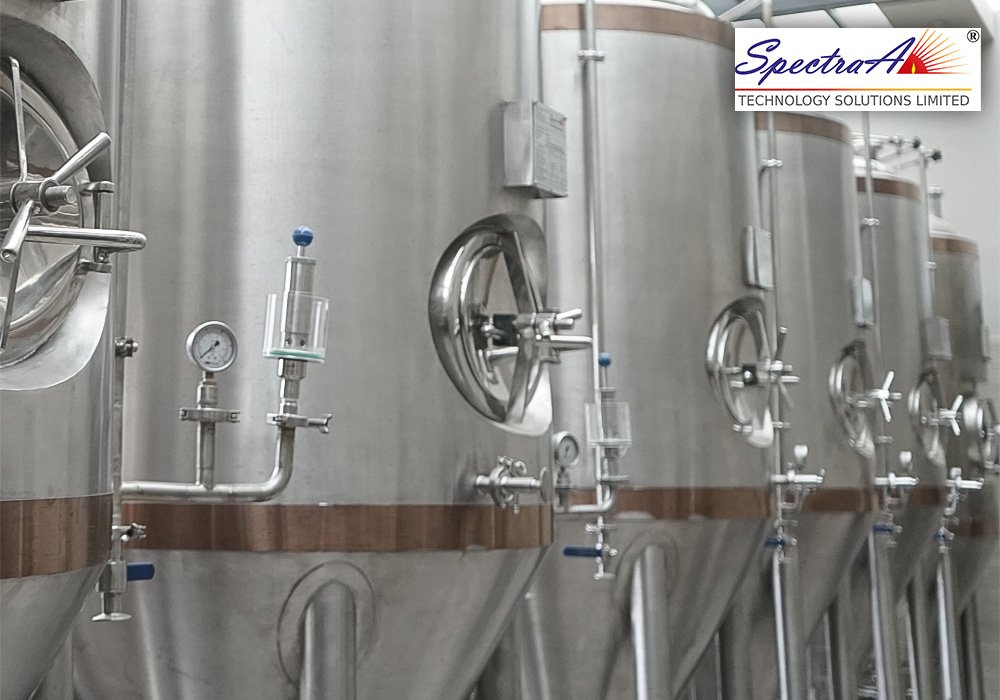
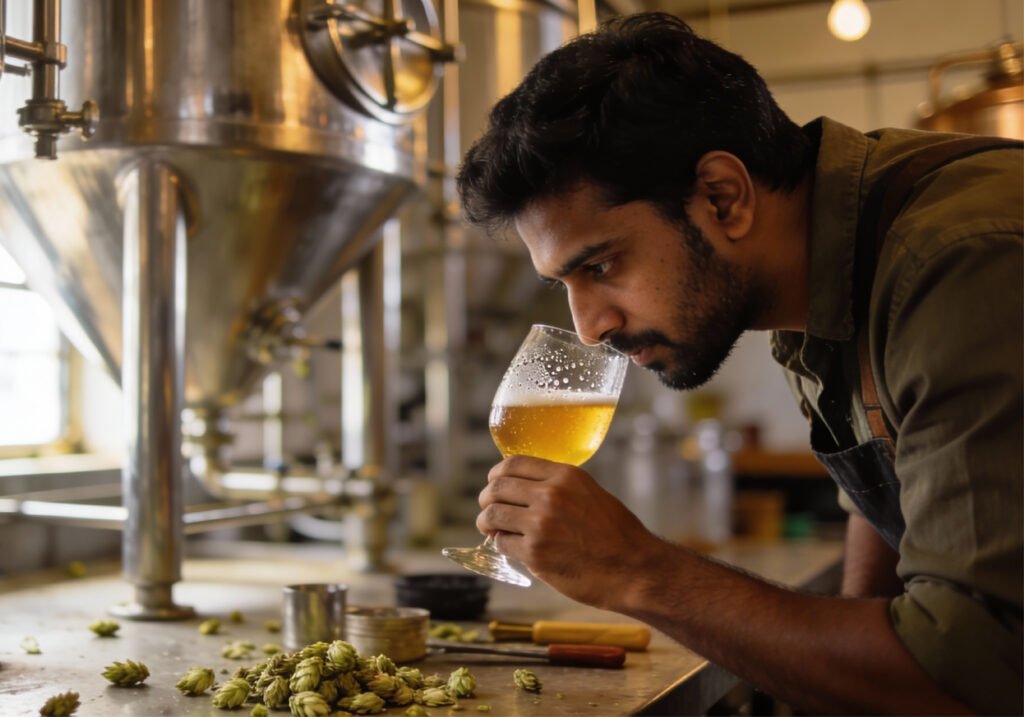
Across India, a growing number of breweries are now investing in brewing discipline rather than flavour additions. Conversations that once revolved around what ingredient to add next are being replaced by discussions about yeast health, fermentation temperature, water chemistry, and conditioning time.
This marks a move from brewpub-style beer to serious brewing, where balance, clarity, and consistency matter as much as creativity.

Why lagers are coming back into focus
This shift is also visible in the changing role of lager. For years, craft beer was defined by ales, especially IPAs. Lagers were often dismissed as too close to mass-market beer. That perception is fading.
Crisp pilsners, helles, and light lagers are increasingly becoming some of the strongest sellers at craft breweries. They suit Indian weather, pair well with food, and allow drinkers to enjoy more than one beer without fatigue. As brewers refine their fermentation and maturation techniques, lagers will form the backbone of the next phase of Indian craft beer.
IPA and lager will shape the market
IPAs will continue to define creativity and brand identity. Lagers will drive volume and everyday drinking.
This balance — expressive IPAs alongside clean, dependable lagers — is how mature beer markets function, and India is now moving in that direction.
The rise of low-alcohol and session beer
Another significant development is the growth of low-alcohol and session beers. Urban lifestyles are changing, and so is the way people drink.
Beers in the 3–4 percent ABV range, session IPAs, and easy-drinking wheat beers allow consumers to drink socially without feeling heavy. This category is expected to expand rapidly as moderation becomes part of modern drinking culture.
Barrel ageing and hybrid fermentation
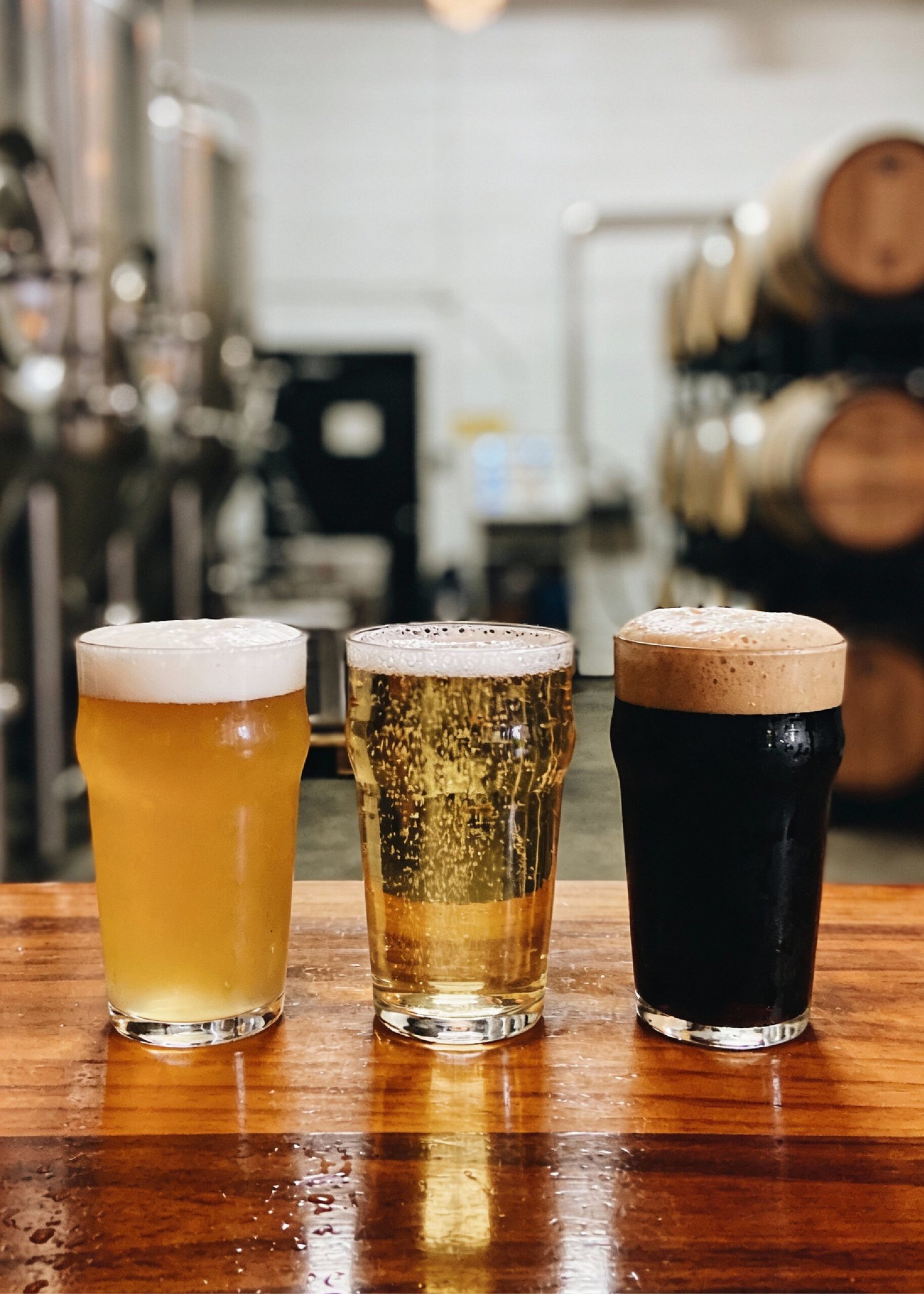
At the premium end, Indian breweries are beginning to explore wine and spirit barrels, along with mixed and wild fermentations. These beers carry more depth, complexity, and story than standard styles.
Barrel-aged stouts, sour ales, and hybrid ferments allow beer to sit alongside wine and whisky in fine-dining and luxury spaces, opening up a new tier for craft beer in India.
Sustainability is becoming a cost strategy
Sustainability is no longer about image alone. Water use, energy costs, and waste management now directly affect profitability. Breweries that invest in recycling systems, renewable energy, and efficient brewing are simply better positioned to survive in the long term.
A more mature beer industry
Taken together, these shifts show that Indian craft beer is entering a more disciplined, commercially aware phase. The focus is moving from excitement to excellence — and that is what will shape the industry’s future.